An author of Speculative Fiction, speculates about fiction.

Latest

Marketing your book: How I did it

Take a seat, and let the Wise Man kwell your fears…

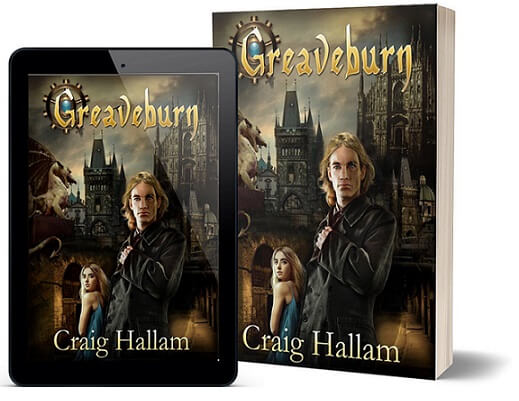
With Greaveburn on its way Inspired Quill have seen fit to assign me my own Marketing Womble, as I like to call her. (Hi Lea! More from her soon!) And since we’ve been working together on our plans for world domination, it’s got me to wondering how I ever managed to do all this myself with Not Before Bed. To be honest, I’m still not entirely sure. But, in an effort to help you lot do the same (while avoiding my mistakes) I thought I’d do a rundown of the steps I took in getting NBB to where it is today. So here we go:

1. Your writing persona
Whether we like it or not, our work as writers/artists/whatever-it-is-you-do isn’t just read/viewed in a vacuum. How you come across is vitally important to whether you’re accepted or not by readers, agents and publishers alike. With this in mind, we need to start thinking about your writing persona. By this, I don’t mean dressing in black, wearing a beret and dark glasses to all your public appearances (although, if that floats your boat…). What I mean is the image you generate; mostly online. We’ve all been bitten by a badly worded email or forum post before. Typing in capitals is shouting etc. And as writers, we REALLY have to be careful. Not only do people expect eloquence and perfect grammar, but think about what you’re saying and how you’re saying it. Humour, especially, is a mine field online with all kinds of interpretations going wrong with the simplest of statements. Be careful! Because these people don’t know you’re generally nice and generous and utterly wonderful. All they see is your words. And grudges are borne easily. Also, with this in mind, think about what you want people to know, and what people NEED to know. Do you want to be complaining about your unrelated day job to potential readers? Do they need to know about your cat’s bowel operation? Probably not, no. And that leads us on to…

2. Social Networking Sites
This is the true necessary evil of creating your writing persona. Your Twitter, Facebook and whatever-else are how people interact with you. Be tactile! Talk and tweet about subjects around your work, and people will find you. With that comes a simple suggestion: Dont just plug your book, over and over. No one likes a plugger :D The counter to my Pro-networking argument is that you are a writer, so don’t let social networking distract you from actually creating. It’s shiny, and interesting and enthralling. Don’t get sucked too far in!

3. Spread yourself around
Yes, you literary hussy, spread yourself around. If you’ve networked properly, you should now know lots of like-minded people. Be polite then…ask favours. Will they guest post on your blog? And don’t forget to offer to reciprocate. It’s this part that’s particularly important. Getting on other people’s sites and blogs gets you seen. Go for it!

4. Forums
This can be a real-time consumer, so picking a few forums and making a good impression is often more beneficial than just dipping in and out. People need to get to know you (or your persona) if they’re going to take an interest. The same stands as before. Don’t just plug your book. Pick threads that will discuss topics around your genre/content and insinuate yourself into them. Remember, if no-one’s talking to you, don’t fear. Forums can be cliquey. Dont be afraid to drop the forum and move elsewhere. Bonus Tip: Goodreads forums are generally full of very polite, nice folk who love to read. Start there!

5. Money, money, money
Do NOT pay for someone to do this lot for you. There are too many “pro” marketers on the net who actually work in Kwik Save as a shelf stacker (slight generalisation). This is nothing you can’t do yourself.

6. Beg, borrow, steal
That’s right. You’re an amateur writer. You need help to get your career into the big time. No author is an island, as they (don’t) say. So ask for help. Beg favours. Most people will be only too happy to help. Which leads us into…

7. Act like a Big Shot
Got your book out? Then hit the locals. Newspapers, radio shows, libraries. Make your own mini-tour in your local area. Local interest can go a long way toward helping you. Write horror? Do it at Halloween. Romance. Valentine’s Day is the time for your tour. Erotica? Well…anytime is good for that! ;D

8. Speculate to accumulate
It don’t have to spend much to make it look like you are. Vistaprint.com will sort you with professional-looking business cards, posters, leaflets etc. for your mini-tour. There are even banners and T-shirts if you really want to go for it. And a Goodreads giveaway is a great way of getting enthusiastic readers who you can be sure will review afterward. The giveaways are very easy to do with the website doing all of the hard work. All you have to do is turn up, and then distribute afterward.

9. The Golden Tip
Your work is you. Be careful. Double check. Use Beta readers. Get your mum to read it, if you like. But don’t put out a sub par product. The excitement can carry you away, rush you. Don’t let it.


I hope this lot will help you out. It certainly did for me. Anyone else got any tips to share?

Thanks for reading.

Book Review: The Graveyard Book by Neil Gaiman

I’m going to warn you, this review is seriously biased. I already love Neil Gaiman’s work. Neverwhere is one of my personal favs and I think I’ve read his short story collections Smoke and Mirrors and Fragile Things have been read and re-read until the ink’s worn off the page by the passage of my gaze. BUT I’m not a fan of American Gods, don’t judge. And so, The Graveyard Book could still go either way.

To start iff with, the book is about a kid growing up in a graveyard, the first few pages are about a seriously creepy murderer called Jack, and by the ned of the first chapter, a small child has escaped on wobbly feet and been taken in by ghosts. I don’t think there are any real spoilers there, but I just wanted to highlight how much great work is crammed into each and every chapter of The Graveyard book. Gaiman’s signature villains are in there with their odd names and overly-polite dialogue (a la Mr croup and Mr Vandemar from Neverwhere) which always give me a case of the willies. And the individual adventures of Bod (short for Nobody) and his undead friends are never formulaic or boring. In fact, they’re downright quirky. Good old Gaiman, you can always count on him for a bit of quirk.

What I really liked (and again this is bias on my part) is how the novel is split up into seperate stories, often a year or two appart, so that you get to see Bod grow up and learn his lessons. In that way, you really get a feel for the character and I seriously hope that there’ll be a sequel from his latter years. But more than that (here comes the bias) it let me know that it’s ok to write a book with this format. Which is good, because my WIP, The Adventures of Alan Shaw uses the same approach to show the protagonist growing up and having his adventures. And, to be honest, I’ve been worrying that it was a bad idea.

But back to the book. It was another one that I inhaled in the course of a day or so. It’s so easy to read, since it’s aimed at a younger audience, but it’s in no way patronising or dumbed down for the kids. The perfect mixture! Kids thrive on mystery and wierdness and they’re sharp enough to figure out what’s going on without a great big neon sign. YA authors, take note! Do it like Neil does (in my head, we’re on first name terms). Basically, an all-round good book, a satisfying read and intriguing hope-for-a-sequel premise. Good times.

And so, Mister Gaiman, not only thank you for a great read, but thank you for saving my literary ass at the same time. Seriously folks, how good is this guy?

Thanks for reading.

GUEST POST! Richard Pierce, author of Dead Men

Oh yes, Zombies and Vamps, the post you’ve all been waiting for has arrived! After reading yesterday’s offering about his excellent novel, Dead Men, you have returned to get a taste of the author himself. And so, without any further ado and with no more preamble or fanfare, I give to you the poet, the author, and all round nice kinda guy, Richard Pierce.

Enjoy the trip – and it is a trip

In the lovely village I am fortunate enough to live in, I’m now talked of as the famous writer. Which is very odd, because I’m not famous at all. There is a common misconception that all published writers have a massive publicity machine behind them, that they’ll just be able to sit at home, in the comfort of their study chair, and watch sales rise and rise while they’re busy eccentrically producing the next masterpiece for their captive audience. Oh, and occasionally fielding phone calls from the publishers offering yet another all-expenses paid book tour to some exotic location. Unfortunately, real life in publishing nowadays very different to that. Or should that be fortunately?

A writer who has found a home for his or her first novel with a small independent publisher will get significant support on the editing side – Jon, my editor, spent hours with me going through the tiniest bits of grammar, meaning, punctuation, explaining the typesetting process etc etc – but when it comes to getting a big marketing push, there just isn’t the resource. It does make me smile when I tell people I’ve been here and there, and that I’m off to the US in June, and then add that I’m paying for it all myself. But, if I believe in the book, I have to do it, however uncomfortable it might be for my Yorkshire wallet.

The week Dead Men was launched, I was in London on the Monday, Portsmouth the next morning, then Doncaster in the evening and for the whole of Wednesday, then home, and another event here in the village on the Friday. I then spent a whole day in London doing 13 radio interviews (half of which were live), one after the other. And on Good Friday, I travelled all the way up to Dundee for a talk in the evening, and then back home on the Saturday. Cold and tired.

Now, don’t misunderstand me, this is not a miserable piece. I am not complaining. It’s been wonderful, sitting on trains, watching the countryside slide by (and the services have, on the whole been reliable, although with insufficient seating at times). It’s been even more wonderful, from a writer’s point of view, to be able to sit and watch lots and lots of strangers, absorbing their idiosyncrasies, storing them for future use, either as walk-on parts in some future novel, or as main characters who will write a whole book themselves, because they’ll be beyond my control.

The best things about all the travelling, though, and the book signings and interviews, are the individuals I got to meet, from crazy, rude people, all the way through to the people who engaged me in long conversations, even if they didn’t buy a copy of the book. It’s a hard slog, and sometimes hardly anyone turns up, but it’s worth meeting even just one person who’s interested, or one person who makes some sort of impression on you. That’s what a writer’s life is all about. Taking other people and putting them or their words into the stories we tell. Here are some of those people.

Like Fiona at the Natural History Museum, one of the Day Guides who help people to plan their days at that spectacular edifice, who calmed my nerves, talked to me about her mother who had met Charles ‘Silas’ Wright years ago when she was a young woman, the same Wright who features at the beginning of Dead Men. Fiona bought a copy for her mother who has since started regular correspondence with me – humbling.

Like Alan in Portsmouth, an Old Danensian like me, who turned up fifteen minutes early so he could show me photos of Portsmouth during the Second World War, who talked to me about my old school, and about how he loves Portsmouth now. ‘Oh, I don’t read much,’ he said to me when I asked him if he wanted to buy a copy of my book. ‘But my wife reads loads.’ And then he turned and left. That’s me put in my place.

A rowing couple in Portsmouth, a couple of lads walking round threateningly and telling me to you know what. Arms in the air. And then the best one, an Irishman whom I, feeling like a used car salesman sharking through Waterstones, approached and asked if he was interested in a book about the Antarctic. ‘Only if it’s about Tom Crean,’ he said, sounding even broader than the late, great Frank Carson. And then we spoke, not just of Tom Crean (who was a real real hero, who saved Teddy Evans’ life by walking over 30 miles without a compass through the freezing cold, and finished his days running a pub in Annascaul, The South Pole Inn), but of my new friend’s life, of the dreadful accident which had robbed is 30-year-old daughter of both her legs as she saved her own daughter from being run over by a refuse lorry on the way to school. And he wasn’t feeling sorry for himself or her, he was dignified, a caring father, a man complete and at peace with what life had dealt him and his family. ‘I’m just getting books for her so she doesn’t get bored,’ he said. We finished our conversation many times over, but turned back to each other time and again to add something else we felt we had to say to each other. I don’t care if I missed out on sales during that conversation. I just wish I remembered his name, but the piece of paper I wrote it down on has disappeared off with Lord knows what else I’ve lost. But the memory’s there. I wouldn’t be surprised if his name was Tom Crean the Third.

Doncaster was meeting old friends again, like noble Mick and Gray, at the Rovers, although they lost, and realising a dream, to have a page of the programme to myself, though I had always dreamed of it being as a player or a manager of the Rovers, but we can’t have everything. And making new friends, meeting twitter buddies like Craig, whose blog this is, who must be one of the kindest men on the planet [aw shucks - Craig], and his partner Laura, who helped me face the unusually quiet Creative Writing students at Hall Cross School. And Simon Saynor, from SineFM, who must be a long-lost half-brother of mine, who still has so much hair and so much energy he puts me to shame. What a craic that was, doing the Breakfast Show with him. All these people are so much more interesting and talented than I am.

An unexpectedly large crowd for my home event in Stradbroke. Lots of beer donated by St Peter’s Brewery, and me so nervous I forgot to thank them, although their MD was sat right in front of me. A friend, ill with cancer, making the effort to come and she rewarding me with a peck on the cheek as well as buying a book. And one lovely man whom I only know by site, coming and buying two copies of the book early and getting me to sign them because he had to rush off again. And Jack Stevens, from the band Cathedrals & Cars, being the most nervous I’ve ever seen him, because the other two couldn’t make it. And lots of familiar and unfamiliar faces. And talking till my throat could talk no more.

The water diviner in Diss Publishing who was ex-Royal Navy, who swore he could remotely divine water and was helping an African state find more water from his front room in Diss. ‘You don’t need divining rods any more,’ he said. ‘You don’t even need to be there. It’s all in the mind.’ And, you know, I believe him.

The crowd at Dundee could have been larger. Publicity angles had got confused, and so the event fell between two stools. But the eight souls who did turn up were wildly enthusiastic and made me go on for an hour and a quarter rather than the 45 minutes I’d planned. Michelle, the Australian girl with a very slight Scottish accent, and her East European friends, the two mature gents who kindly laughed at all my jokes and asked me really good questions. Nick, an old friend from Cambridge who works up there sometimes and had hidden himself from view when I’d gone into Waterstones before the gig, because he and his wife wanted to surprise me. Russel from the Waterstones up there was a brick (he writes crime novels himself), and the gathering down the pub afterwards with McEwans 80 was, er, lots of fun. And the folks at the Discovery Centre who gave me a free tour of Scott’s Discovery, which I later found out, back in Sassenach country, is haunted by quite a few spirits. Full cycle.

And so, now, as I brace myself for my US tour, as I try to edit my next book, A Fear of Heights, I look back at those wild crazy days just after book launch and wish I’d written it all down, in the minutest detail. Ah, but I have, and, like I said to Craig when I promised him this blog post – all the best stories are written in your head first.

Thanks to Richard for a great post! I’m honoured to have been a very small part of it. And now what you’re wondering is where you can find out more about this guy? Well, you can follow his Twitter with @tettig, or hit his blog HERE. Or, of course, you can buy his book…

Hit the pic to see reviews/buy the book.

Thanks for reading.

Review: Dead Men by Richard Pierce

I don’t do this very often. Mostly because I don’t get to read half as much as I’d like, but mostly because I post reviews on Goodreads instead of on the blog. However, there’s an exception to every rule and this particular one is going to be broken by Dead Men.

Now, I’ve met a lot of fellow aspiring authors over the internet, mostly on Twitter, and read a LOT of independent work. Some good, some that still needed work. But now and again, I meet someone who really does deserve to be raised above us all; someone who deserves a healthy dose of props/kudos/respect. This post is my little nod to Richard Pierce, who I believe to be worthy of those three things. 

Richard has done what many (including myself) aspire to do. He’s been published in the traditional rather than the self-published route. That means that he’s jumped those dreaded hurdles which wake us up at night, in a flop sweat, screaming unhinged syllables into the dark. You say that’s just me? Oh right…sorry. Anyways, he’s made it by hook or by crook, via a collection of poetry and now his book is on the shelves. Congratulations, Richard!

What’s astounding about this story is that I’ve actually found time to read it! Here’s the official blurb:

Birdie Bowers is a woman with a dead man’s name. Her parents had been fascinated by Henry Birdie Bowers, one of Captain Scott s companions on his ill-fated polar expedition. A hundred years after the death of Bowers and Scott, she sets out to discover what really happened to them… The discovery of Captain Scott’s body in the Antarctic in November 1912 started a global obsession with him as a man and an explorer. But one mystery remains why did he and his companions spend their last ten days in a tent only 11 miles from the safety of a depot that promised food and shelter? Dead Men tells the story of two paths. One is a tragic journey of exploration on the world s coldest continent, the other charts a present-day relationship and the redemptive power of love.

Now what’s interesting, and brilliant about Dead Men is right there in the blurb. This is not only a story about one of the greatest feats in human exploratory history, but its about the smaller event of two people falling in love. If you’re expecting a long-winded, overly glamourous re-telling of Scott’s journey, you won’t find it here. If you’re looking for a chick-flick style romance, go somewhere else. This book is neither formulaic or predictable. I can honestly say that there is nothing I’ve ever read which has been quite like Dead Men. The mix of a real-life, very relatable story and the themes of obsession are a fantastic contrast to each other, while Pierce shows us that they’re not Polar (excuse the pun) opposites at all. You don’t have to understand WHY someone becomes obsessed, you only have to accept it as part of them and, if you love them, maybe even embrace it a little yourself. Who knows? You might find something beautiful to share.

And that’s what Dead Men is all about, at least it was for me.

The man himself.

Now that the literary study is over and done with, what did I think? I can throw compliments at Pierce and his work until the cows come home and all f them will seem hackneyed and bland, or overly enthusiastic and hence ignorable. So I’ll put it this way. I bought Richard’s book from my Doncaster branch of Waterstones on a Tuesday afternoon. By 7 o’clock the next morning, I’d read it. More than that, I read the last page, and realised I was smiling.

‘Nuff said.

Go and read it. Download it, buy the hard copy, have it sent to you on post-it notes, but read it. You won’t be disappointed.

And now for the surprise that I promised you all through Twitter!


(DRUM ROLL)

If you tune into the blog tomorrow…Richard Pierce, author of Dead Men, will be guest blogging about his book touring experiences!

You heard!

Thanks for reading.

Steampunk UK

Since hitting the Steampunk genre running, and becoming a full-on obsessive, it’s been a hobby of mine to find the little pockets of enthusiasts around the UK. These people, after all, will hopefully become my readers when Greaveburn hits the shelves this summer. And ever since I started my search, it has never ceased to amaze me how incredibly creative people can be.

The beauty of Steampunk, in my opinion, is how it encourages people to create, build, imagine and fashion all manner of doodads and thingumies. Etsy is, of course, the best way to find out about the hundreds of talented folk who make trinkets, gadgets, costumes and things-with-no-name. With these folks in mind, I think it’s only fair that I share the wealth of what I’ve found with you. Starting with The Dark Power.com.

Now here’s someone who takes their creating seriously! Not only does Dark Power make the most impressive creations, but they have even won awards for their Steampunk short film Beast of the Air! Take a look:


Good, eh? I wouldn’t mind one of those guns for when I go shopping in ASDA. Can’t wait to see them tackle the book trailer for Greaveburn! (Hint hint, Dark Power, if you’re reading this :D )

Have a look HERE for more of their gadgets and gizmos .

Moving on to another tinker-type, I’d like to draw your attention to The Little Steampunk Shop. Chock full of things that you can actually BUY, alll handmade and utterly cool-looking. If you need some Whatsits for your next Steam-theme endeavour, this is where to get them! Here’s just a couple of things that caught my eye:

Incredible clock design.

A Raygun that comes in its own glass dome.

There’s all manner of jewelry, modded USB sticks, clockwork insects and mice, lamps…By Jiggins, I’m salivating! With payday on the horizon, and my Steampunk outfit nearly ready, I think I’ll be visiting The Little Steampunk Shop again very, very soon.

It seems that while our American comrades love their Steampunk, there’s much love in our own fair country for some Neo-Victorian shinanigans, too. I can’t wait to meet some of them at the Weekend at the Asylum Steampunk Convention in September. It’s going to be an absolute riot!


Thanks for reading.

Steampunk Movies!

Yes, I’m one of those people that just randomly types things like “Steampunk Movies” into Google and hopes to find something genius to watch. Of course, you end up with the usual list of top ten lists that you’ve seen before and nothing new. Well, my friends, this time I have gone deeper into the Matrix to bring you a juicy eye-feast. Youtube be praised!

As I have discussed in a previous post I’m always as looking for more examples of the incredible creativeness that Steampunk encourages. And here are some visual treats for you:

One of my personal favourites are the very kitch and toungue-in-cheek adventures of the League of Steam. They’re a team who battle paranormal beings. It’s great. Here’s an episode to watch, but there are loads more on their website.

http://blip.tv/play/AYLq%2BT0C.html?p=1http://a.blip.tv/api.swf#AYLq+T0C

Research is your friend

It strikes me that I don’t talk about my writing process very much and, contrary to popular belief, I do have one. While I do most of my plotting in my head, only setting it down in notes when it’s exceptionally vivid to me, the rest of the idea-to-page process is pretty normal. One of the things I think are incredibly important, possibly beyond all others and especially for writers of Speculative Fiction in all its glorious forms, is research.

If you’re going to make your story/novel/flash fiction/novella as realistic as it can be (and by realistic, I mean believable despite the wierdness) then research is where it’s at. As an example let’s use my current WIP, The Adventures of Alan Shaw. This is a very different beast to Greaveburn. Alan Shaw is an Alternate History/Steampunk novel based in the very real Victorian era of England, albeit with some technological flights of fancy. But in order to make my Neo-Victorian elements work, I had to understand what the victorian era was really like. If I had a motto, it’d be:

Learn the rules before you break them.

And so I do research. A lot. Of course, the internet is your friend. There are sites or wikis on every subject known to humankind somewhere in the unending virtual vaults. But call me old fashioned, I still like my books now and again.

Here's what I used for Alan Shaw so far.

As you can see, there’s quite a mix in there. Let’s break down what I think is important about researchas the groundwork for your writing:

1. Know your genre

When writing Greavburn, I had no idea that I was actually working on a Steampunk novel. I was aware of the Gothic literature sub-genre and loved its aesthetic. Gormenghast by Mervyn Peake is one of my favourite books, and that was the kind of grand darkness I wanted to instill in Greaveburn. But Steampunk wasn’t even on my radar. And so, when I discovered that it existed, and that Greaveburn fit the bill, I panicked. What if someone had already done what I had? How restrictive to Greaveburn’s reception would that be?

I learnt my lesson for working on Alan Shaw. I’ve read James Blaylock’s Homunculus, J.W. Jeter’s Infenal Devices and pretty much memorised The Steampunk Bible by Jeff Vandermeer and co. And now I can confidently say that I know what to do and what not to do, what’s old hat and what’s relatively new (hey, that rhymes. I should write that down). Knowing your genre makes sure that you hit your demographic while avoiding any “it’s all been done” style comments.

2. Go simple

Finding reference books that are quick to read, while still being representative of the subject you’re researching, can be a real struggle. People love to bash on about their expert subject to the point of mind-numbing boredom. But you dont need a huge tome, reaching 3000 pages across four volumes about Victorian London by Lord Cyril Fanthorpe the 3rd esp. to know your stuff. In order to make your story realistic, all you need are the little touches. Those little details make the difference between just some woman in a dress and a young governess wearing a crinoline pinofore. You never have to mention it again, but that’s the kind of period detail that shows you’ve put the effort in.

But as I was saying, there’s an easy way to find those things out. Go for children’s books. They’re brilliant! They have pictures to help get the right feel in your prose, they hit only the important topics and give you great overview of any subject. The Eyewitness series is brilliant for historical stuff, if you’re interested in that stuff.

3. Get your facts right

If you’re writing about a certain place, be it a city or town or foreign country, get your facts right. Never forget that your readers know their stuff. Don’t think you can flim-flam them with sweeping references to places. With Alan Shaw, I have to evoke an image of Victorian London that rings true to someone who’s never been to London and someone who walks its streets every day. Google Maps can take you anywhere you need to go, and even tell you the quickest way for your character to walk/drive around their environment. You dont have to give an itemised list of corners turned between your Detective’s home and the mortuary, but it helps if you know how long it would take and what’s in between so you can describe it if need be.

While Google Maps is great for the present day, historical settings pose a little more of a problem. And so I got myself some maps:

Victorian London, imprisoned in plastic.

They came in four pieces, originally, but with a little industrious folding and one of those frameless plastic frames (contradictory, I know) I now have an easily accessible map of Victorian London. What’s better than that, with the plastic covering, if you get some dry-wipe markers, you can plot routes, circle areas or points of interest to your heart’s content without ruining the source material for later use! (This is an Art Attack!)

My doodles marking Covent Garden Market, and routes for Alan to take around London.

 4. The Counter-argument


Just remember: There’s another side to research. Don’t get too bogged down with it. Learn what you need and move on. It’s a tool to help you write, it’s not words on the page.

Well, folks, that’s it for now. I hope this post has been as useful to you as my researching endeavours have been to me. If you have any researching tips of your own, then feel free to share. I’m always looking for new ways to do what we do.


Thanks for reading!

Budapest: Visit Greaveburn

My trip to Budapest, although only a few days, was the most surreal experience of my life. As some of you may know from my going-away post, I did absolutely no research about the city before going there. It was a literal out-of-the-hat type holiday. I didn’t know what places of interest to visit, what historical sites were there or any of the history of the country. I especially didn’t know the language. But when I got there, I realised that I DID know the city. In fact, for the last three years, I’ve been visiting Budapest in my head without even knowing it. Because, as I walked the streets, I realised that parts of Budapest were exactly how Greaveburn to look! I don’t just mean in a similar-kind-of-way. I mean in a This-is-what-was-in-my-head kind of way.

Here’s a gallery to show you what I mean, the captions, of course, are which Greaveburn buildings I relate to the real ones:

The Academe, where Greaveburn's scientific elite gather.

The Palace where Archduke Choler rules, and prison to Abrasia.

The exterior of Lord Happenstance's townhouse.

The Temple, once the centre of Greaveburn's philosophical endeavours.


That’s only four pics, but I’m afraid they’re quite high res and I can’t fit any more on. Maybe I’ll do another gallery on a separate page later on.

Anyway, you get the idea. And with the edits for Greaveburn coming back from Inspired Quill for the second time, everything’s starting to feel just a little too real. We’re getting closer and closer, folks. The time will soon be upon us. I may sound calm right now, but expect some serious panic-posts very very soon :)

Anyway, now that I feel I’ve visited some of the places in my head, and that I may well be living in the Matrix, I’d like to suggest Budapest for your next trip. If you like to relax, but in a city environment, I can’t think of anywhere else I could suggest. It’s peaceful, despite being a big city. No one rushes around. The food is great. The exchange rate right now is pretty damn good. Just avoid the Austrian beer. NOT good. The local brew, Dreher, however, is great.

While we were there, we poked around just about anywhere we could. Especially in search of a good bar. But our strangest discovery was a little place called Verne’s, named after the incredible Jules Verne. And outside Verne’s, I found something that made me feel completely at home; a piece of Steampunk awesomeness:

A little piece of Steampunk in Budapest.

Great isn’t it? I dropped a Greaveburn business card into it for some unsuspecting Hungarian to find. Who knows? I might get a following over there! (I’m not holding my breath hahaha).

As always, I’d like to apologise for how long it’s been since I’ve posted. I know I’ve been slacking off. But, as you will soon see, it’s all for a good reason. The next time I post, I hope, it’ll be to show you my Steampunk costume for the upcoming Weekend at the Asylum Steampunk convention. I intend to look utterly ridiculous, and I can’t wait! Keep your eyes on this spot!

Thanks for reading.

Airports

Being in an airport terminal is as close to experiencing a Zombie Apocalypse refugee centre as it’s possible to be. People herded together, their only belongings crammed into a single case or carry bag; sweaty and tired, people move from one place to the next, searching for a place to rest among the masses. People group together into ill-fated tribes in an effort to survive. Stairwells and food courts become bedrooms. Pockets of tension errupt into arguments. Children swarm like urchins.

The only food comes in packets and swiftly runs out, prices hiked up to maintain some rudimentary economy which soon degrades into a barter system as people trade for sustainance. And the hopefuls, clustered to the huge windows, praying for salvation to arrive from the sky and carry them beyond the infection.

It’s a bleak, soul destroying place. The only thing missing is the Zombies. And that’s just a matter of time…

The road goes ever on and on…

As you lovely folk are reading this, I’m taking a trip. I know, it’s just another reason to be separated from my laptop and doing NO writing whatsoever, but I think this might have some great research potential. You see, dear friends, I’m off to Budapest today.

Can't wait to explore this!

I know NOTHING about the city. Nothing at all. And I think that’s why I’m so excited. New York last year was incredible and I can;t wait to go back, but one of the main problems was that I knew too much about it. Being the utter Film-Geek that I am, I knew where all kinds of movies were shot and OBVIOUSLY had to visit them, then hitting the tourist attractions because there’s a compulsion to at least see the big stuff. And then I absolutely had to see the National History Museum. It was great, but there was a lot of pressure to run around and not much time to chill.

Budapest should be the exact opposite. There’s no pressure to see anything or be anywhere, nothing I really must see. And so it’s going to be an utter chill out. More than that, I have a real love of going places which have a completely different culture to ours. Again with New York, it was great, but the culture is so similar, and the language identical, that I didn’t really feel like I’d left home at all. It was lovely and warm and cosy and friendly. Now and again, I like a bit of cultural and linguistic discomfort. I like struggling to get by. It makes me feel like an explorer, if only in a diluted way and for a few days.

And then there’s the research. Being in such a wildly different place with its own architecture and styles (and from what I’ve seen, quite a gothic style) will be a great boost to my creativity, I’m sure. Alan Shaw’s next adventure might even be based there. Who knows? We’ll just have to see. But you know I’m a sucker for a gothic facade and a network of alleyways. they make me go all gooey and goosepimpley :) Expect dark things to be walking abroad when I return.

Another reason for going somewhere different is to drop off a whole bundle of my writer’s business cards. Lets see if it works! By this time in a month, I might have a whole new bunch of Hungarian readers! Probably not, though… ;)

Anyways, folks, I’ll see you when I get back, and regale you with tales of Hungarian adventure. I hope you all enjoy your week!


Thanks for reading.

Follow

Get every new post delivered to your Inbox.

Join 2,259 other followers